A 2-Person Show Including the Art of Aaron Wilder
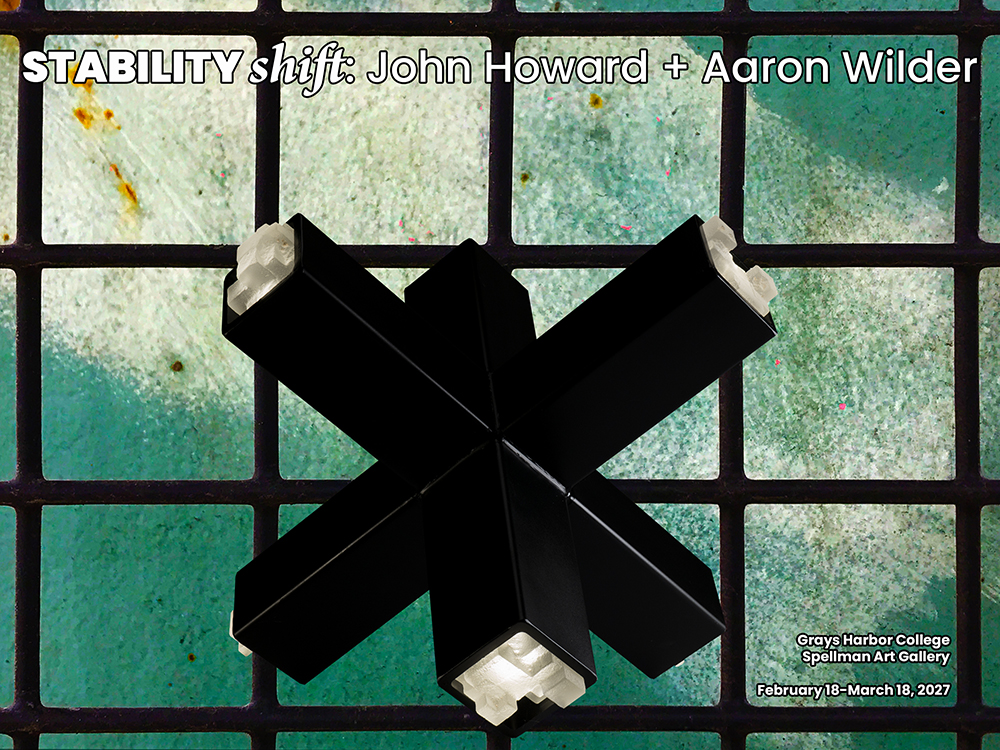
February 18-March 18, 2027
Opening Reception: Thursday February 18, 2027, 5:00pm
Spellman Art Gallery
John Spellman Library, Building 1500
Grays Harbor College
1620 Edward P. Smith Dr.
Aberdeen, WA 98520
Translation is understood not as faithful reproduction but as interpretation under constraint. Every process reorganizes information according to its own material logic. These translations produce artifacts—not as errors or imperfections, but as visible traces of encounters between intention, material, and process. A bubble suspended within glass, the tonal compression of instant film, the reflective qualities of a surface, or the subtle shifts introduced through rendering each reveal the conditions under which the work came into being. The artifact is not evidence of failure; it is evidence that a transformation has occurred.
Stability Shift brings together the work of John Howard and Aaron Wilder, two artists whose practices investigate how meaning changes through encounters between intention, material, process, and perception. Working across sculpture and lens-based media, both artists begin with forms of organization that appear relatively stable: Howard constructs precise digital models from basic geometric forms, while Wilder isolates and frames fragments of the built environment through photography and video. As these forms pass through different materials, technologies, and processes, however, their apparent stability begins to shift. What emerges is not a faithful reproduction of the original but something shaped by the conditions of its making.
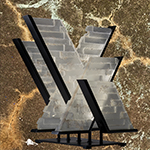
Howard’s internally illuminated glass and steel sculptures reduce natural forms to their most basic geometry before passing through the contingencies of hand fabrication, casting, and assembly. His digital models offer mathematical precision, but translating those forms into physical objects introduces the unpredictable behavior of wood, sand, glass, heat, gravity, and light. Saw marks and wood grain remain visible in the molds; prepared sand can collapse or erode; bubbles and ripples become suspended in the glass. These changes do not simply disrupt the original design. They become part of the individual character of each sculpture, revealing the distance between a form as conceived and a form as realized.
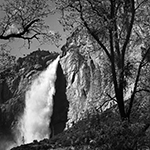
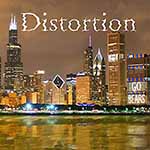
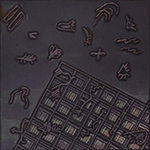
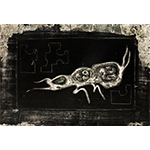
Wilder’s photographs, Instax installations, and moving images similarly begin with observations of the physical world before passing through a series of translations. Fragments of the built environment are isolated through the camera and then transformed through cropping, rendering, partitioning, repetition, printing, reassembly, and projection. A single photograph can become an installation composed of dozens or hundreds of separate images; an incidental recording can become a layered moving image. Each transformation changes the relationship between the original subject and what the viewer encounters. Familiarity can give way to abstraction, and an image that initially seems stable can become difficult to identify when its context or scale changes.
In both practices, the processes of making remain visible rather than disappearing behind the finished work. Materials, tools, technologies, and acts of translation introduce differences that neither artist can completely control. Repetition does not necessarily produce sameness; precision does not eliminate variation; and closer examination does not always produce greater certainty. Instead, each work holds multiple possibilities at once, shifting between what it appears to be, how it was made, and how it is understood.
The exhibition also considers how meaning changes with scale and attention. Individual components accumulate into larger structures that can, in turn, dissolve into their constituent parts. From one distance an image coheres; from another it separates into discrete elements. A sculpture can read simultaneously as a simplified geometric form and as a record of the physical processes that produced it. These shifts complicate the expectation that closer observation will necessarily lead to a clearer or more complete understanding. What seems stable from one position may become unstable from another.
Stability Shift is therefore less concerned with establishing a single interpretation than with making space for the complexity of perception and experience. Meaning is not fixed entirely in the object, the image, the material, or the artist's intention. It emerges through relationships among all of them, and those relationships can change. The works invite viewers to move between recognition and uncertainty, whole and fragment, intention and contingency, and to consider how quickly we tend to turn complex experiences into categories that feel more stable than they actually are.
Situated within the John Spellman Library, the exhibition extends these questions into a space devoted to organizing and interpreting information. Research often moves between individual observations and larger structures of knowledge, between evidence and interpretation, and between certainty and revision. The works in Stability Shift similarly resist a single fixed reading. Rather than offering conclusions about what viewers see, they invite sustained attention to the processes through which perception, interpretation, and meaning take shape.