
by Aaron Wilder, Curator of Collections and Exhibitions at the Roswell Museum
Roswell Daily Record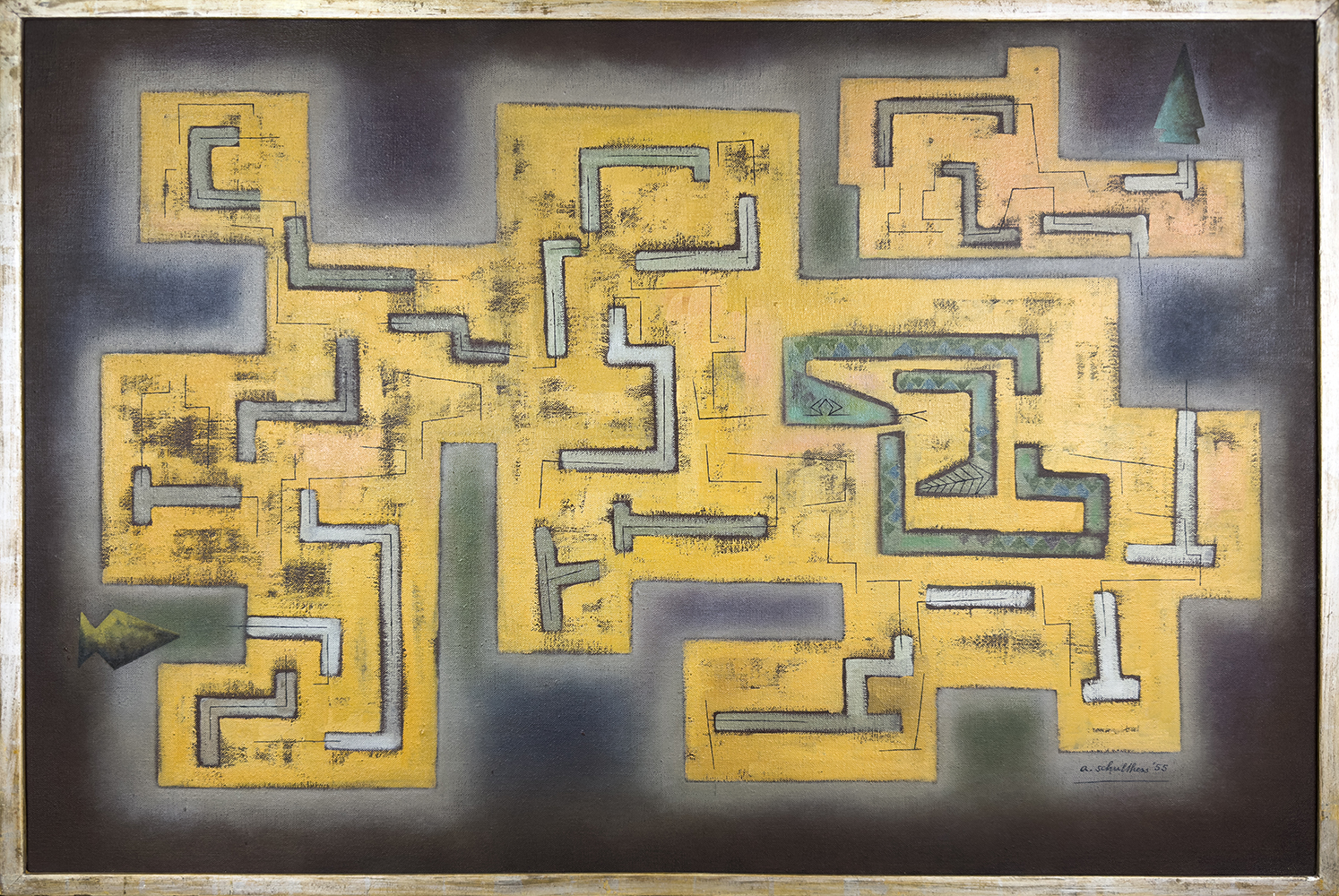
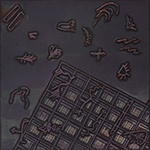
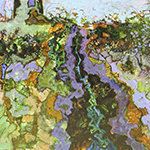
“Where the Snake Sleeps” by Amalia Schulthess, Circa 1954-1955, Oil on Canvas, Gift of the Artist, 1996.026.0001
Some paintings ask to be admired from a distance. Others seem to invite the viewer inside. Amalia Schulthess's Where the Snake Sleeps, an oil painting in the Roswell Museum's permanent collection, belongs to the second category. At first glance, the composition resembles an abstract arrangement of geometric forms, but a closer look reveals something more intriguing: arrows indicating directions, wall-like passages, and winding routes that suggest a maze, map, or ancient settlement.
The artist behind this remarkable work, Amalia Schulthess, was born in 1918 in Oberaach, Switzerland, and spent her childhood in the nearby canton of Thurgau. Creativity surrounded her from an early age. Among the family's frequent visitors was the celebrated Swiss-German painter Paul Klee, who encouraged the young Schulthess to pursue her artistic interests.
Klee's influence is not difficult to imagine. One of the twentieth century's most innovative modernists, he developed a highly personal visual language filled with symbols, playful geometry, dreamlike spaces, and signs that seem to exist somewhere between writing and drawing. Rather than depicting the visible world realistically, Klee often invented visual systems that invited viewers to decipher hidden relationships. Schulthess' own paintings would later share this fascination with symbolic imagery, suggesting places and ideas through simplified forms rather than direct representation.
She continued her artistic education at the School of Applied Arts in Zurich and the State College in Trogen. By 1941, she had relocated to New York to marry her Swiss fiancé, Hans George Martin de Schulthess, beginning a new chapter in both her life and artistic career.
New York introduced her to another modern artist: Piet Mondrian. The Dutch painter became both a friend and mentor, encouraging her to continue painting while offering practical advice that strengthened her technical skills. Mondrian's work is renowned for its disciplined compositions of vertical and horizontal lines balanced by rectangles of primary color, all rooted in his belief that abstraction could express universal harmony. Although Schulthess never adopted Mondrian's strict visual vocabulary, his emphasis on structure, order, and carefully organized space may have reinforced her own growing interest in geometric composition.
Throughout the 1940s and 1950s, Schulthess established herself primarily as a painter, exhibiting her work in Europe as well as Los Angeles, San Francisco, and Santa Fe. As she became part of Taos, New Mexico's vibrant artistic community, she entered a region that had become an international center for modern art, attracting both American and European artists eager to engage with its distinctive landscapes, cultures, and history.
While working in Taos during the 1950s, Schulthess became acquainted with Andrew Dasburg, one of New Mexico's most influential modernists. Dasburg had introduced Cubist ideas to the Southwest decades earlier, breaking landscapes into interlocking planes and geometric forms while remaining deeply responsive to the rhythms of the New Mexican terrain. Around him flourished an extraordinary artistic community that included painters experimenting with abstraction, regional subjects, and European modernist ideas. Schulthess entered this environment with her own unique perspective, combining lessons learned in Europe with her experiences in New York and the American Southwest.
Her growing presence in the state's art world culminated in a 1956 exhibition at what is now the New Mexico Museum of Art in Santa Fe. In 1996, she donated Where the Snake Sleeps to the Roswell Museum, along with works by Edward Chávez and Andrew Dasburg. The painting reflects many of the ideas circulating among modern artists during the 1940s and 1950s while remaining strikingly original. The painting unfolds across a warm ochre ground populated by angular corridors, fragmented walls, directional arrows, and interconnected pathways rendered in muted greens and grays. On the right side of the composition, darker green passages subtly evoke the sinuous form of a snake.
The title itself invites multiple interpretations. Snakes occupy important places in many Indigenous belief systems throughout the Southwest, where they often symbolize renewal, protection, water, or spiritual power. At the same time, serpents have long carried equally rich meanings in European mythology, Jungian psychology, and modernist symbolism. Rather than pointing to a single narrative, Schulthess seems to draw upon several traditions simultaneously, allowing the image to remain suggestive.
Instead of depicting mountains, trees, or sky, Schulthess constructs a place that appears meant to be navigated. The arrows function not as decorative motifs but as instructions, directing movement through a network of enclosed spaces. Combined with the wall-like forms, they transform the painting into something resembling an architectural plan, archaeological site map, or symbolic diagram. The viewer is no longer simply looking at a landscape but traveling through it.
Beginning in the 1960s, Schulthess shifted her attention from painting to sculpture, the medium for which she is best remembered today. Her sculptures embraced abstract organic forms inspired by eggs, seeds, shells, and other natural structures, typically carved from stone or wood or cast in bronze. Around this time, she relocated to Italy and shared a foundry with the British sculptor Henry Moore. Moore's monumental biomorphic sculptures, which transformed the human figure into simplified organic shapes, helped redefine modern sculpture after World War II. Although Schulthess maintained her own artistic voice, both artists shared an enduring fascination with forms derived from nature and the expressive possibilities of abstraction.
Amalia Schulthess died in Santa Monica, California, in 2021, leaving behind a remarkably varied body of work that spans continents, mediums, and artistic traditions. Where the Snake Sleeps remains a compelling chapter in that story. More than an abstract composition, it offers viewers an invitation to follow its pathways, consider its symbols, and imagine the many journeys that shaped one remarkable artist's vision.
The statement “It’s Your Art” is meant to emphasize that the Roswell Museum’s collection is your collection. Despite the museum’s closure due to the October 2024 flood, staff continue to work behind the scenes on care for and conservation of collection objects. Please stay tuned for more from the Roswell Museum. We appreciate the outpouring of support from the community during our closure. And remember, “It’s Your Art.”














.jpg)




.jpg)