A Group Show Including the Art of Aaron Wilder
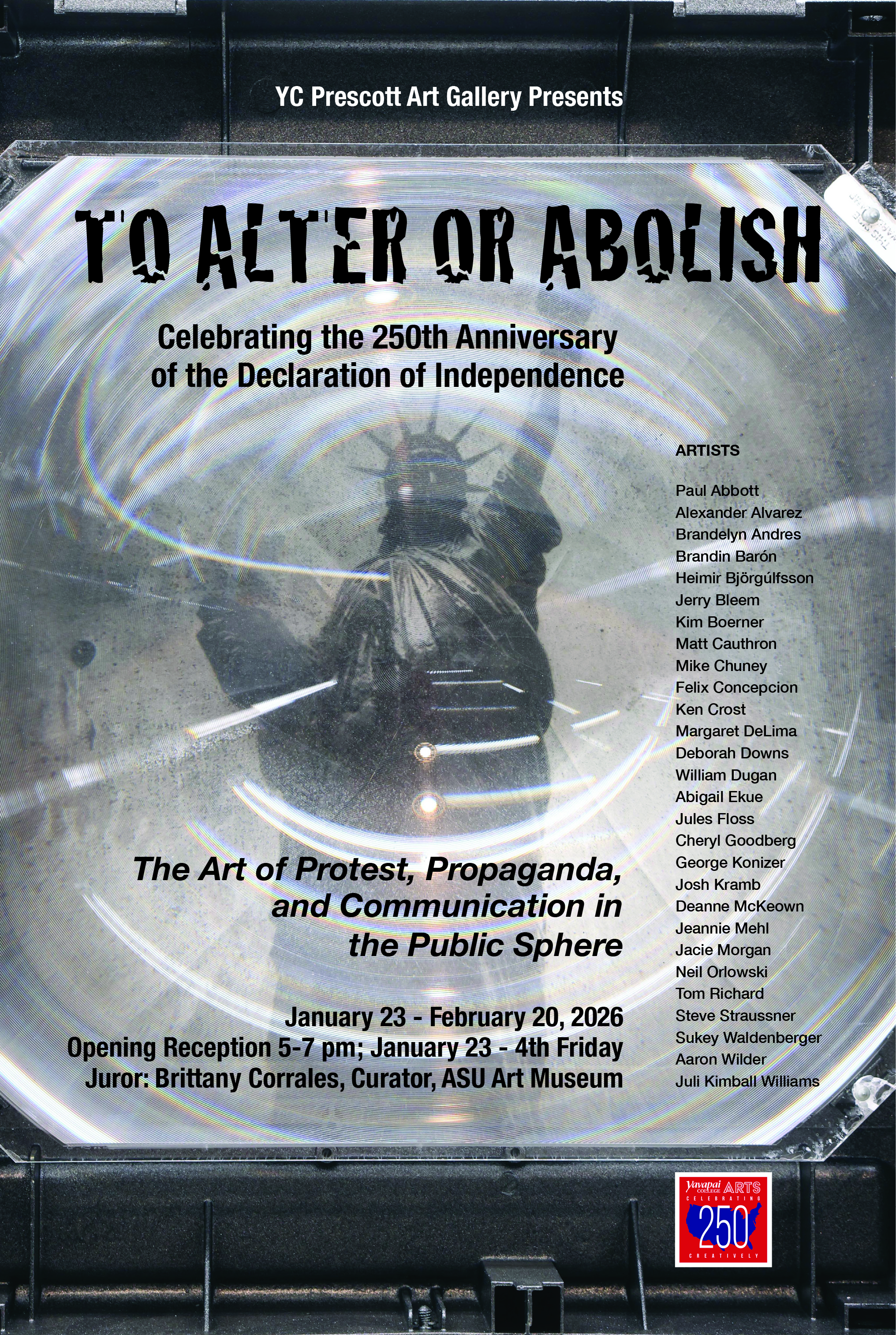
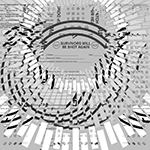
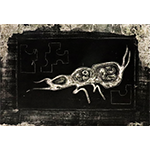
Image Caption: Matt Cauthron, Liberte Purdue, Mixed Media, 15” x 12” x 3”
January 23-February 20, 2026
Opening Reception: Friday January 23, 2026, 5:00pm-7:00pm
Yavapai College
Prescott Art Gallery
1100 East Sheldon Street
Prescott, AZ 86301
To mark the 250th anniversary of the American experiment, the Yavapai College Art Gallery presents To Alter or Abolish, an exhibition devoted to protest, propaganda, and communication in the public sphere, the very instruments by which a democracy speaks to itself, argues with itself, and, at its best, corrects itself. The Declaration of Independence frames the United States not as a finished project but as an ongoing proposition, a people asserting that governments derive “their just powers from the consent of the governed,” and that when power becomes destructive of human ends, “it is the Right of the People to alter or to abolish it.” Those lines insist that self-determination is not merely a private feeling but a public practice sustained through words, images, assemblies, and the contested spaces where citizens persuade one another.
The works in this exhibition create a civic arena. Matt Cauthron’s Liberte Purdue depicts the Statue of Liberty as a ghostly figure beneath a translucent surface with concentric arcs of light, suggesting a lens, shield, or surveillance optics. This work questions the meaning of freedom in a culture constantly processing, packaging, defending, and distorting it. George Konizer’s photograph Tears for America shows a vast, blue-gray brick wall with metal stars and streaks resembling stains, weathering, or grief. Below, a parked truck with a row of small smiley faces perched above the windshield sits under a tall light pole transforming an ordinary scene into an unsettling civic tableau. The smiley faces, bright and simplified, feel like a thin veneer of cheer over a harder surface, reflecting propaganda’s promise of normalcy despite the wall’s story.
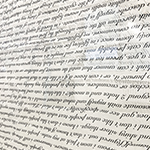
Without dissenting voices, without uncomfortable images, without the right to assemble, speak, and publish, democracy cannot exist as anything more than a ceremony. This is why the Declaration’s promise matters now, 250 years on. If democracy is consent, then communication is the means by which consent is formed, challenged, withdrawn, or renewed. Orwell’s Animal Farm shows how easily revolutionary language can be repurposed into obedience, how slogans replace thought, how commandments are revised, how equality is promised while hierarchy quietly returns. The nightmare is not only censorship; it is the crowd’s gradual surrender of judgment, until propaganda becomes indistinguishable from truth because it is repeated loudly enough and often enough.
America is a living, breathing idea holding up a torch, an illumination called freedom, but torches must be carried; they can be dropped, dimmed, or stolen and used to burn. Perhaps it is fitting, then, that our national anthem is the only one that ends in a question. As you move through To Alter or Abolish, consider what these artists ask of our eyes and our conscience, and ask yourself: does that Star-Spangled Banner yet wave over the land of the free and the home of the brave?
-Bryan Robertson, Dean of Visual and Performing Arts
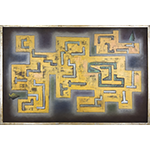
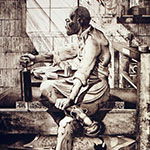
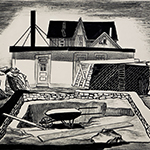
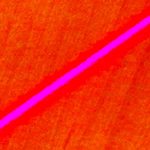
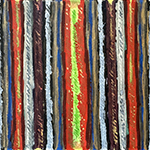
Work from Aaron Wilder's Abundance of Caution is included in the exhibition. The phrase “Abundance of Caution” existed before the Covid-19 pandemic, but many strongly identify it with the pandemic due to how frequently it was used during the global-to-local shelter-in-place. A key component of the meaning behind the phrase is that the level of caution justifies preemptive action even if it may seem unnecessary. Post-pandemic our society is still living in a state of caution. Barriers are a fact of human life, but our contemporary reality seems particularly fixated on boundaries. From the US-Mexico border to Gaza to our own picket fences we protect with shotguns, notions of separation become stronger and stronger, significantly impacting our self- and worldview.
About the Juror:
Brittany Corrales serves as Curator at ASU Art Museum, where she has organized over a dozen exhibitions and oversees the museum’s encyclopedic collection of prints and drawings. She holds an MA in Art History from Arizona State University and a BA in Art History and Spanish from the University of Arizona.