by Aaron Wilder, Curator of Collections and Exhibitions at the Roswell Museum
Roswell Daily Record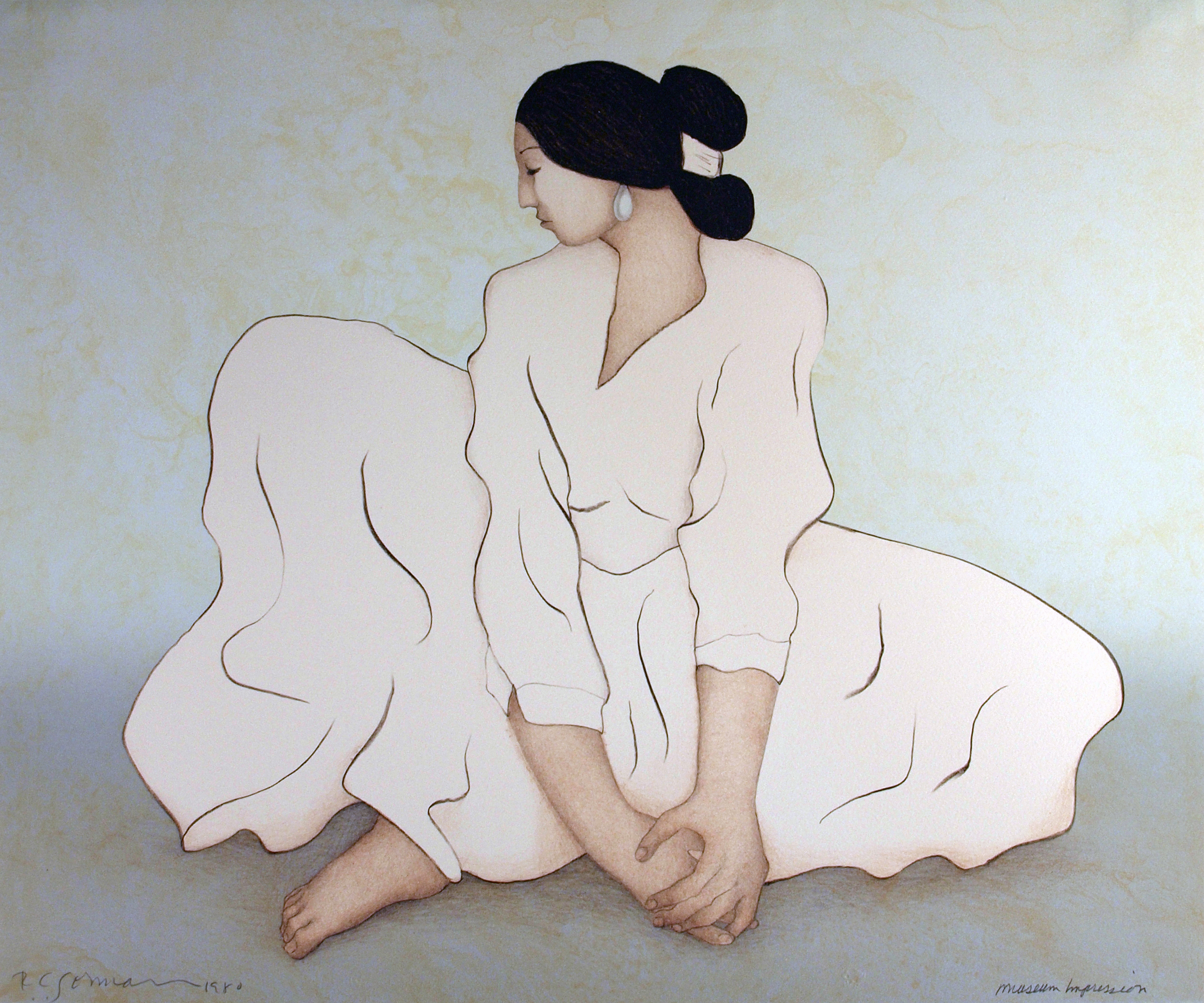
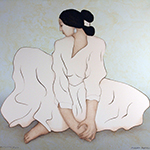
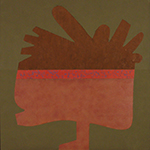
“Chitsa II” by RC Gorman, 1980, Lithograph on Paper, Gift of R.V. and Virginia Collins Desmond, 1981.031.0014
In his autobiography, RC Gorman: The Radiance of My People, the artist described his primary subject matter: “Navajos always had respect for strong, powerful women who would go out and chop wood, herd sheep, have babies in the field. My Indian woman isn't glamorous but she is beautiful. She is earthy, nurturing, and it is a constant challenge to capture her infinite variety… I deal with the common woman who smells of the fields and maize. She lives and breathes… My women work and walk on the land. They need to be strong to survive. They have big hands, strong feet. They are soft and strong like my grandmother who gave me life.”
Born as Rudolph Carl Gorman in Chinle, Arizona, RC Gorman grew up in the Navajo (Diné) Nation raised by his mother Adele Katherine Brown and his father Carl Nelson Gorman. Gorman's journey began in a traditional Navajo hogan, where he honed his artistic skills from a young age, guided and inspired by his grandmother.
In World War II, Gorman’s father served as one of the Navajo Code Talkers who used their Indigenous language to encode US military communications. Gorman followed in his father’s footsteps and served in the US Navy. Before and after his military service, Gorman studied literature and art in Flagstaff, Arizona, Mexico City (where he was significantly influenced by Mexican muralists Diego Rivera and David Alfaro Siqueiros), and San Francisco, California where he lived 1955-1968.
San Francisco played a crucial role in Gorman’s life as the origin of his artistic success and the development of his queer identity. In San Francisco, Gorman helped organize the American Indian Arts Group, serving on the painting committee as chairman. It was also during his time in San Francisco when an associate outed him as gay to his parents. After the unsanctioned disclosure, Gorman wrote in a letter to his parents, “I am a homosexual. It’s unfortunate only in that I myself did not tell you.”
Gorman's iconic representations of Navajo women are celebrations of their strength and beauty. His work is deeply rooted in the cultural and spiritual aspects of Navajo life, yet he expressed these themes through a lens that acknowledged his own queer identity. His portrayals of women, often depicted in powerful and graceful forms, are reflections of both his admiration and personal connection to his subjects.
In the 2019 article So Let Me Paint: Navajo Artist RC Gorman and the Artistic, Native, and Queer Subcultures of San Francisco, California in the Pacific Historical Review, Jordan Biro Walters elucidated the connection between Gorman’s subject matter and his queer identity by writing: “Gorman, in his private correspondence, often referred to himself as a woman… Gorman moved fluidly between genders in his performativity. He also reinterpreted traditional pieces of Navajo attire such as Navajo boots and jewelry as ‘drag.’ When he pondered wearing them outside of the Navajo reservation, they took on new meaning as a hybrid expression of both indigeneity and queer identity… Throughout his career, interviewers almost always asked Gorman why he painted women. The answer to this question is more complex when his own queer identity is taken into account. In a letter to gallery owner [John] Manchester, Gorman explained why: ‘It’s me. I am every… woman I draw.’”
Gorman’s first major commercial success was in his first show at Manchester Gallery in Taos, New Mexico in 1965. Every single exhibited artwork sold. This was the beginning of the end of his time in San Francisco and he moved to Taos shortly thereafter. He borrowed money from family members in the late 1960s to buy Manchester Gallery. Gorman transformed it into the Navajo Gallery, the first Native American-owned fine art gallery. His career saw both critical acclaim and controversy, as he balanced commercial success with a deep commitment to his cultural roots. Despite critiques regarding the commercialization of his art and its romanticized portrayal of Navajo life, Gorman's artistic legacy is rich with reverence of and relatability to his subject matter.
Gorman’s achievements include international recognition and numerous accolades such as the Harvard University Humanitarian Award in Fine Art and the New Mexico Governor’s Award of Excellence. His legacy endures in the way he bridged disparate worlds—melding Navajo tradition with modern artistic expression and his queer identity.
The statement “It’s Your Art” is meant to emphasize that the Roswell Museum’s collection is your collection. Despite the museum’s closure due to the October 2024 flood, staff continue to work behind the scenes on care for and conservation of collection objects. Please stay tuned for more from the Roswell Museum. We appreciate the outpouring of support from the community during our closure. And remember, “It’s Your Art."




.jpg)


.jpg)